
His Era, Political Landscape, Societal Role, and the Conspiracies He Faced
Abstract
Imam Ali ibn Musa al-Reza (765–818 CE), the Eighth Imam in the line of Shia Muslim leadership, was a towering spiritual, intellectual, and social figure of the early Abbasid era. This article examines his life, the political environment under Caliph al-Mamun, his landmark appointment as heir apparent, his contributions to Islamic scholarship and interfaith dialogue, and the political circumstances surrounding his death. It is intended for students, researchers, and general readers seeking a historically grounded and balanced understanding of this revered personality.
Keywords
Primary Keywords: Imam Ali Reza, Eighth Imam, Shia Islam, Abbasid Caliphate, al-Mamun, Islamic history
Secondary Keywords: heir apparent, Khorasan, Islamic scholarship, interfaith dialogue, political conspiracies, Mashhad, Imam Reza shrine, Muslim Imams, early Islamic governance
1. Introduction: Context and Relevance
Islamic history is rich with personalities whose contributions shaped not only religious thought but also the social and political fabric of their times. Among these figures, Imam Ali ibn Musa al-Reza holds a uniquely significant position. Born in Medina in 148 AH (765 CE), he lived through one of the most turbulent periods of the Abbasid Caliphate — an era defined by power struggles, theological disputes, and the interplay between religious authority and statecraft.
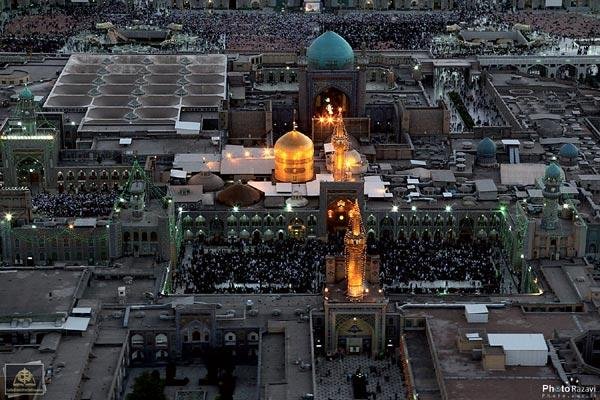
His life remains relevant today not only to Muslims who venerate him as the Eighth Imam, but also to historians, scholars of religion, and anyone interested in how spiritual leaders navigated complex political environments while maintaining their moral and intellectual integrity. The city of Mashhad in northeastern Iran, where his shrine stands, draws millions of pilgrims annually, underscoring his enduring significance across the Muslim world.
2. Purpose and Scope of This Article
This article aims to provide a comprehensive, factually grounded, and accessible account of Imam Ali Reza’s life and legacy. It covers:
- His biographical background and family lineage
- The political and social environment of the Abbasid era
- His intellectual and scholarly contributions
- His appointment as heir apparent under Caliph al-Mamun
- The political dynamics and conspiracies of his time
- His social and spiritual impact on Muslim society
- His legacy and continued influence
The article maintains a neutral, informative tone and does not engage in sectarian advocacy. It draws on established historical scholarship and respected Islamic sources.
3. Key Concepts and Definitions
3.1 Who Is an Imam in Shia Islam?
In Shia Islamic tradition, an Imam (Arabic: إمام) is not merely a prayer leader but a divinely guided successor to the Prophet Muhammad (peace be upon him). Shia Muslims believe that the Imams possess special spiritual knowledge and authority and are appointed by God through the Prophet’s lineage (Ahl al-Bayt). The Twelve Imams of Twelver Shia Islam form a continuous line of leadership beginning with Imam Ali ibn Abi Talib.
3.2 The Abbasid Caliphate
Following the overthrow of the Umayyads, the Abbasid Caliphate (750–1258 CE) established a new political order, first in Kufa and later in Baghdad. This era was marked by profound intellectual flourishing, exemplified by the Translation Movement at Bayt al-Hikmah, while also witnessing persistent political tensions among various factions, including Shia Muslims and Alid descendants.
3.3 Heir Apparent (Wali al-Ahd)
The term Wali al-Ahd refers to the designated successor to a ruling Caliph. Imam Reza’s appointment as heir apparent by Caliph al-Mamun was an extraordinary and historically unprecedented event in which a reigning Caliph named an Alid Imam as his successor — a decision with profound political implications.
3.4 Khorasan
Khorasan was a vast historical region encompassing parts of modern-day Iran, Afghanistan, Turkmenistan, and Uzbekistan. It was politically significant during the Abbasid era as the base of al-Mamun’s power and the region to which Imam Reza was summoned. The city of Mashhad, where Imam Reza is buried, lies within historical Khorasan.
4. Historical Context: The World Imam Reza Inhabited
4.1 The Abbasid Political Landscape
The early 9th century CE was a period of intense political competition within the Abbasid Caliphate. Following the death of Harun al-Rashid in 809 CE, his sons al-Amin and al-Mamun engaged in a civil war (the Fourth Fitna) that ended with al-Amin’s defeat and death in 813 CE, leaving al-Mamun as the sole Caliph. This conflict had fractured the empire politically and socially.
Al-Mamun, based in Khorasan and supported by Persian administrative and military elites, faced the challenge of reconciling rival factions and legitimizing his rule. His approach was notably different from his predecessors: he was interested in theological debate, supported Mutazilite rationalism, and sought a form of political reconciliation with Alid (descendants of Imam Ali) communities, who had long been a source of opposition to Abbasid rule.
4.2 The Social Fabric of Muslim Society
Muslim society in this era was stratified and diverse. Arab tribal identities, Persian administrative traditions, and theological schools (madhhabs) all competed for influence. The Shia Muslim community, although politically marginalized under the Abbasids, maintained a significant intellectual and social presence. Medina and Kufa were major centers of Alid learning, and the Imams served as focal points of religious guidance for their communities.
Economic disparities, frequent unrest in Abbasid provinces, and the challenge of governing a multiethnic empire meant that political legitimacy was a constant preoccupation for Abbasid rulers.
5. Biographical Background of Imam Ali Reza
5.1 Birth and Lineage
Imam Ali ibn Musa al-Reza was born on 11 Dhul Qadah 148 AH, corresponding to approximately 765 CE, in Medina, in the Hijaz region of the Arabian Peninsula. His father was Imam Musa ibn Jafar al-Kazim (the Seventh Imam), and his mother was a noble woman known as Ummul Banin Najma (also referred to as Taktuam or Sakan), believed to have been of Nubian or North African origin, highlighting the multicultural nature of the Prophetic family.
His lineage traces directly to the Prophet Muhammad through his daughter Fatima al-Zahra and son-in-law Imam Ali ibn Abi Talib, placing him in the heart of what Muslims call the Ahl al-Bayt (People of the House of the Prophet).
5.2 Personality and Scholarly Eminence
Historical sources across both Sunni and Shia traditions describe Imam Reza as a man of exceptional learning, humility, and moral character. He was known for his depth of knowledge across Islamic jurisprudence (fiqh), theology (kalam), Quranic exegesis (tafsir), medicine, and philosophy. Scholars and students from diverse backgrounds sought his guidance and debated with him on complex religious and philosophical questions.
He earned the epithet al-Reza (meaning “the one who is pleasing to God” or “the one who is satisfied”) — a title that, according to Shia traditions, was given to him both by divine designation and by his exceptional moral qualities that earned widespread approval even among those who opposed him politically.
5.3 The Era of His Imamate (179–203 AH / 799–818 CE)
Imam Reza assumed the Imamate following the death of his father, Imam Musa al-Kazim, who died in Abbasid captivity in 799 CE — a somber reminder of the political climate in which the Imams operated. Imam Reza’s Imamate of approximately 20 years was a period of both intellectual productivity and political pressure.
6. Intellectual and Scholarly Contributions
6.1 The Musnad of Imam Reza
One of the most significant scholarly legacies of Imam Reza is his collection of traditions and discourses, which has been compiled under the title Musnad al-Imam al-Reza. This work contains his responses to questions in theology, jurisprudence, ethics, and medicine, and is widely referenced in Islamic scholarly literature. The breadth of topics covered reflects his encyclopedic knowledge and the intellectual environment of his time.
6.2 Theological Debates and Interfaith Dialogue
Al-Mamun, known for his interest in theological discourse, organized famous debates (munazarat) in Khorasan and Merv in which Imam Reza was invited to engage with scholars from various religious traditions, including Christian theologians, Jewish rabbis, Zoroastrian priests, and representatives of different Islamic schools of thought. Historical accounts preserved in works such as Uyun Akhbar al-Reza by Sheikh al-Saduq (Ibn Babawayh, 10th century CE) document these exchanges in detail.
These debates are historically valuable not only as records of early Islamic theological thought but also as examples of structured interfaith dialogue. Imam Reza’s approach was characterized by reasoned argument, citation of shared scriptural references, and respect for his interlocutors — qualities that continue to be highlighted by scholars of Islamic intellectual history.
6.3 Contributions to Islamic Medicine
A remarkable dimension of Imam Reza’s scholarship is his discourse on medicine and health. A treatise attributed to him, sometimes called the Risalah al-Dhahabiyyah (The Golden Treatise or Golden Letter), outlines principles of preventive medicine, diet, hygiene, and treatment. While questions of attribution continue to be discussed among scholars, the treatise reflects the medical knowledge of the period and has been studied in the context of the history of Islamic medicine.
6.4 Ethical and Social Teachings
Imam Reza’s documented sayings (ahadith) on social ethics emphasize kindness to family and neighbors, intellectual humility, the importance of knowledge-seeking, and just treatment of all people regardless of social status. These teachings had a formative influence on Shia ethical thought and continue to be cited in religious education across the Muslim world.
7. The Political Dynamics of His Era
7.1 Al-Mamun’s Motivations for the Heir Apparent Appointment
In 201 AH (816–817 CE), Caliph al-Mamun made the extraordinary decision to designate Imam Ali Reza as his heir apparent — a decision that placed an Alid Imam in the direct line of Abbasid succession for the first and only time in history. Understanding this decision requires examining al-Mamun’s complex political calculations.
Historical sources, including al-Tabari’s Tarikh al-Rusul wa al-Muluk and al-Masudi’s Muruj al-Dhahab, suggest multiple motivations. Al-Mamun faced ongoing Alid rebellions across the empire, and by elevating Imam Reza to the position of heir apparent, he sought to symbolically neutralize opposition from Alid supporters by incorporating their leader into the Abbasid political framework.
Additionally, al-Mamun may have genuinely respected Imam Reza’s learning and character, and the appointment aligned with his broader project of theological and political reconciliation. Some historians also suggest that al-Mamun calculated that by bringing Imam Reza under close Abbasid supervision, he could monitor and limit his independent influence.
7.2 Imam Reza’s Response to the Appointment
Historical accounts consistently record that Imam Reza accepted the position of heir apparent with reluctance and only under significant pressure. He reportedly made explicit conditions before accepting, including that he would not be involved in appointments, dismissals, or affairs of state governance — preserving his role as a spiritual and religious leader rather than a political administrator.
This stance is historically significant. It demonstrates Imam Reza’s consistent approach of maintaining the integrity of his religious role while operating within the political constraints of his time. His acceptance was not an endorsement of the Abbasid system but a pragmatic response to a situation he could not avoid.
7.3 Abbasid Opposition and Internal Tensions
The appointment of an Alid as heir apparent was deeply controversial within Abbasid political circles. Senior Abbasid princes and officials in Baghdad viewed it as a threat to dynastic continuity. Al-Mamun’s own uncle and key figures in the Abbasid court in Baghdad formally removed al-Mamun from the Caliphate and proclaimed Ibrahim ibn al-Mahdi as the new Caliph in a counter-revolt — though this counter-revolt ultimately failed when al-Mamun returned to Baghdad in 819 CE.
These internal Abbasid tensions created an environment in which Imam Reza was caught between competing power centers, his own community’s expectations, and the responsibilities of his new political role.
8. Key Stakeholders and Actors
8.1 Caliph al-Mamun (786–833 CE)
The seventh Abbasid Caliph, known for his intellectual interests and his controversial religious policies, including the Mutazilite inquisition (Mihna). His relationship with Imam Reza was complex — marked by political calculation, genuine intellectual engagement, and, according to many historical accounts, ultimately ended in tragedy.
8.2 The Alid Community
Descendants of Imam Ali ibn Abi Talib who had long been subject to Abbasid political pressures. They viewed Imam Reza as their religious and spiritual guide. His appointment as heir apparent was received with mixed feelings — some saw it as an opportunity, others as a political trap.
8.3 Abbasid Court Officials and Princes
Senior figures within the Abbasid political establishment who perceived Imam Reza’s appointment as a threat to Abbasid dynastic legitimacy. Their opposition created a hostile political environment around him.
8.4 Scholars and Intellectuals
The early Abbasid period was a golden age of Islamic scholarship. Figures such as Imam al-Shafi’i (founder of the Shafi’i school of jurisprudence, 767–820 CE), who was a contemporary of Imam Reza, and many other scholars operated in this intellectual environment, contributing to what would become the classical tradition of Islamic thought.
9. Imam Reza’s Role in Transforming Muslim Society
9.1 Spiritual and Moral Leadership
At a time when the Muslim community was deeply divided by political conflicts and theological disputes, Imam Reza served as a stabilizing spiritual figure. His emphasis on Quranic guidance, ethical conduct, and intellectual engagement helped maintain cohesion within the Shia Muslim community and earned him respect beyond its boundaries.
His documented interactions with people from all social classes — scholars, merchants, farmers, and rulers — reflect a pastoral approach to leadership that prioritized accessibility and compassion. Historical accounts describe him eating with his servants at the same table, refusing to treat social distinctions as barriers to human dignity.
9.2 Preservation and Transmission of Knowledge
The Imam’s years in Medina before his forced relocation to Khorasan were marked by active teaching. He trained numerous students who would go on to transmit his knowledge across the Islamic world. His transmission of hadith (Prophetic traditions) through the chain of Imams is considered by Shia scholars to be one of the most reliable chains of transmission.
9.3 Interfaith Understanding
Imam Reza’s participation in interfaith dialogues organized by al-Mamun represents one of the earliest documented examples of structured Muslim engagement with other religious traditions. His method — engaging with the internal logic of other traditions, asking questions, and citing shared principles — established a model for constructive theological discourse.
9.4 Promotion of Justice and Human Dignity
Imam Reza’s teachings consistently emphasized the importance of justice (‘adl) as a fundamental principle of both theology and social life. His documented sayings on the responsibility of the learned toward the ignorant, the wealthy toward the poor, and the powerful toward the weak reflect a coherent social ethic that resonated broadly within Muslim society.
10. Political Conspiracies and Challenges
10.1 The Circumstances of His Relocation
In approximately 200–201 AH (815–817 CE), al-Mamun summoned Imam Reza from Medina to his court in Merv (in modern-day Turkmenistan), in the heart of Khorasan. The journey itself was politically orchestrated — Imam Reza was required to travel via specific routes that avoided areas with strong Alid support, suggesting that the Caliph’s invitation carried elements of political control.
The summons placed Imam Reza far from his community in Medina and brought him under direct Abbasid supervision — a pattern that earlier Imams had also experienced. His father, Imam Musa al-Kazim, had died in Abbasid captivity in Baghdad years earlier.
10.2 The Nature of the Political Environment
The political environment surrounding Imam Reza was characterized by multiple competing interests: al-Mamun’s court politics, Abbasid dynastic opposition, ongoing Alid revolts in other parts of the empire, and the complex loyalties of regional governors and military commanders. Imam Reza navigated this environment with documented caution and deliberateness.
Some historical sources note that he was aware of the dangers surrounding him. His statements preserved in Shia hadith collections reflect an awareness of his political vulnerability while maintaining his commitment to his spiritual and moral responsibilities.
10.3 His Death and Subsequent Debates
Imam Reza passed away in 203 AH (818 CE) in the city of Tus (modern Mashhad) in Khorasan, while traveling with al-Mamun toward Baghdad. The official account attributed his death to natural causes following illness after consuming grapes. However, historical accounts from both Shia and Sunni traditions record widespread suspicion, particularly within Shia Muslim communities, that his death was not entirely natural.
Al-Tabari records that al-Mamun expressed grief publicly and arranged for a burial near the tomb of his own father Harun al-Rashid. The controversy surrounding the circumstances of his death remains a subject of historical inquiry and has been examined by scholars such as Wilferd Madelung in his work on Shia Imamology.
It is important to note that historical certainty on this question is elusive — the available sources reflect different political perspectives, and contemporary scholars approach the question with appropriate methodological caution.
11. Impact on Society and Region
11.1 The City of Mashhad and Its Global Significance
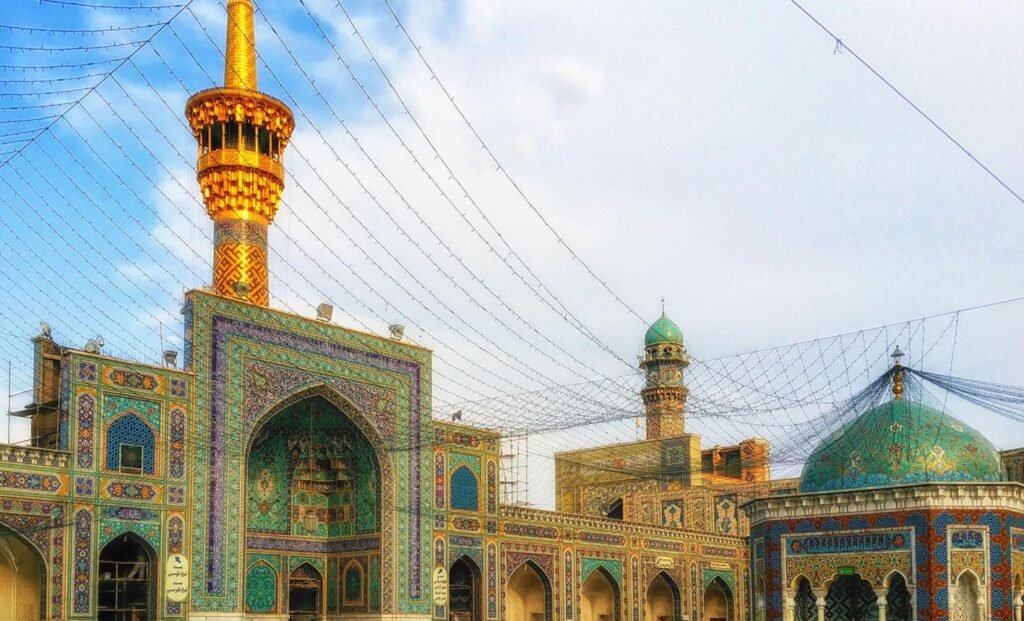
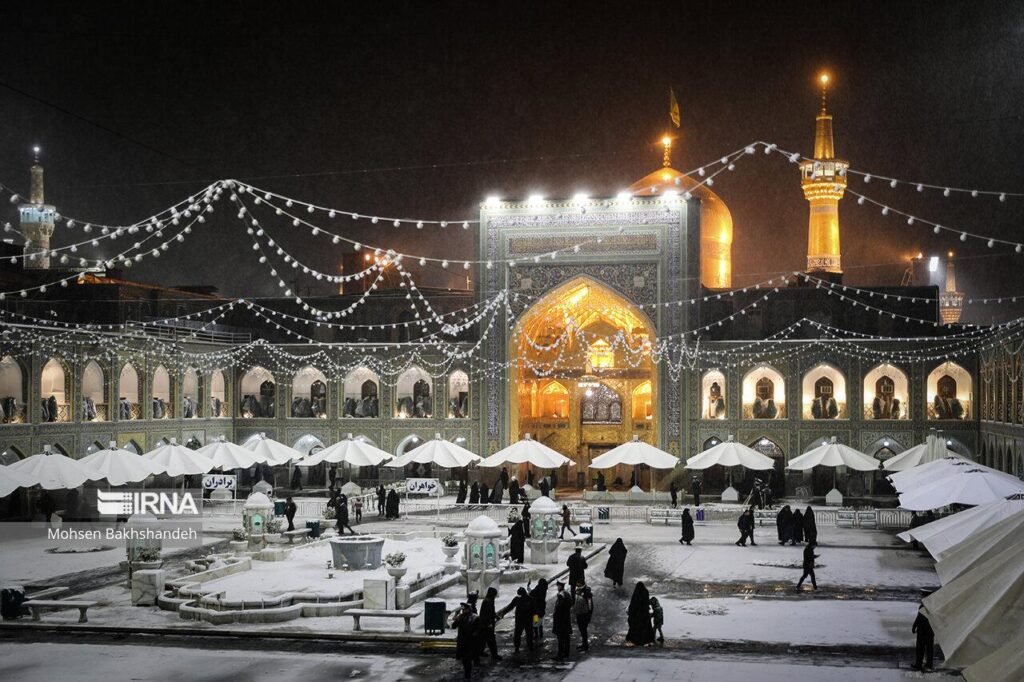
The burial of Imam Reza in Tus transformed the region. Over subsequent centuries, the area around his tomb developed into the city of Mashhad (meaning “place of martyrdom”), which today is the second-largest city in Iran with a population of over three million, and one of the largest pilgrimage destinations in the Muslim world. The Imam Reza Shrine complex is one of the largest in the world by area, encompassing mosques, museums, libraries, and charitable facilities.
11.2 Influence on Shia Islamic Thought
Imam Reza’s theological and jurisprudential contributions became foundational texts in Shia Islamic scholarship. His discussions on the nature of God (tawhid), divine justice (‘adl), and the role of the Imam in Muslim life are systematically referenced in classical Shia theological works and continue to be studied in seminaries (hawzas) in Najaf, Qom, and Karbala.
11.3 Broader Islamic Heritage
Beyond the Shia community, Imam Reza is respected across segments of the broader Muslim world for his learning and moral character. His tradition of engaging with diverse perspectives and his contributions to Islamic intellectual culture are acknowledged in multiple Islamic scholarly traditions.
12. Positive Outcomes and Constructive Dimensions
12.1 Models of Intellectual Engagement
The intellectual legacy of Imam Reza provides a historical model for how religious knowledge can be engaged constructively with diverse philosophical, scientific, and theological traditions. His debates with scholars of other faiths remain relevant as examples of structured, respectful interfaith dialogue.
12.2 Social Ethics and Human Dignity
His documented emphasis on human dignity, equality before God, and the responsibilities of the privileged toward the marginalized reflects principles that have enduring social value. His teachings on these themes continue to be cited in discussions of Islamic social ethics.
12.3 Cultural and Architectural Heritage
The shrine complex of Imam Reza in Mashhad represents one of the great achievements of Islamic architecture and continues to be a center of culture, scholarship, and charitable activity. It supports hospitals, libraries, educational institutions, and welfare programs, embodying a tradition of religious philanthropy rooted in the Imam’s own emphasis on serving society.
12.4 Preservation of Islamic Scholarship
The chains of religious transmission associated with Imam Reza contributed significantly to the preservation of early Islamic scholarly heritage. The documentation of his debates, teachings, and traditions by his students and contemporaries ensured that this knowledge was not lost in the political upheavals of the era.
13. Common Misunderstandings and Clarifications
Misunderstanding 1: Imam Reza sought political power as heir apparent.
Clarification: Historical accounts clearly document that Imam Reza accepted this position reluctantly and under pressure, with explicit conditions limiting his political involvement. His acceptance was a pragmatic response, not an expression of political ambition.
Misunderstanding 2: The designation of Imam Reza as heir apparent represents an Abbasid-Alid political alliance.
Clarification: The reality was far more complex. Al-Mamun’s motivations were primarily political, and Imam Reza’s response was one of reluctant compliance with conditions. The appointment caused significant opposition within the Abbasid establishment itself.
Misunderstanding 3: Imam Reza is venerated only by Shia Muslims.
Clarification: While veneration of the Imams is a distinctively Shia practice, Imam Reza’s learning, character, and spiritual standing have been acknowledged across different Islamic traditions. His inclusion in hadith chains recognized by Sunni scholars reflects his broader scholarly standing.
Misunderstanding 4: The Risalah al-Dhahabiyyah is a well-established medical text.
Clarification: The attribution and precise historical status of this text continue to be discussed among scholars. It should be understood in its historical context as a document of intellectual interest rather than as a clinically validated medical text.
14. Frequently Asked Questions (FAQs)
Q1: Who was Imam Ali Reza, and why is he important in Islamic history?
Imam Ali ibn Musa al-Reza (765–818 CE) was the Eighth Imam in the Twelver Shia line of succession. He is important for his exceptional contributions to Islamic scholarship, his role in interfaith dialogue, and the historically unique circumstances of his appointment as heir apparent to the Abbasid Caliph al-Mamun. His shrine in Mashhad, Iran, remains one of the most visited pilgrimage sites in the Muslim world.
Q2: Why did al-Mamun appoint Imam Reza as heir apparent?
Al-Mamun’s motivations appear to have been a combination of political strategy (seeking to neutralize Alid opposition by co-opting their leader), genuine respect for Imam Reza’s learning, and his broader project of political and theological reconciliation following a civil war. Historical sources suggest this was a complex decision with multiple layers of political calculation.
Q3: How did Imam Reza respond to his forced relocation to Khorasan?
Historical accounts record that Imam Reza accepted the summons to Khorasan reluctantly and with conditions. He maintained his role as a spiritual and moral leader and continued to engage in teaching, debate, and guidance, even while operating under the political constraints of the Abbasid court.
Q4: What was the significance of Imam Reza’s interfaith debates?
The debates organized by al-Mamun at his court brought together scholars from diverse religious traditions in structured dialogues. Imam Reza’s participation represents one of the earliest documented examples of Muslim engagement in formal interfaith theological discourse, and his method of engagement is studied by scholars of Islamic intellectual history.
Q5: Where is Imam Reza buried, and what is the significance of the location?
Imam Reza is buried in Mashhad (historically part of Tus) in Khorasan, northeastern Iran. His shrine has developed over centuries into one of the largest pilgrimage complexes in the world, attracting millions of visitors annually. The city of Mashhad grew around his tomb and today is a major center of Islamic culture, scholarship, and welfare.
Q6: How did Imam Reza contribute to Islamic scholarship?
Imam Reza’s contributions include his compiled traditions (Musnad al-Imam al-Reza) in theology, jurisprudence, ethics, and medicine; his participation in structured theological debates; his training of students who transmitted his knowledge; and his documented teachings on social ethics and human dignity. These contributions are foundational texts in Shia Islamic scholarship.
Q7: What is the historical context of the political conspiracies surrounding Imam Reza?
The political environment of the early 9th century Abbasid Caliphate was characterized by dynastic civil war, factional competition, and theological disputes. Imam Reza was navigating an environment in which Alid figures had historically been subject to political pressure and, in some cases, imprisonment. His death in 818 CE under contested circumstances reflects the vulnerability of his political position.
Q8: What is the lasting legacy of Imam Reza for Muslim communities today?
Imam Reza’s legacy includes his contributions to Islamic theology and jurisprudence, his model of intellectual engagement with diverse traditions, his emphasis on social ethics and human dignity, and the cultural and charitable heritage of his shrine complex in Mashhad. For Shia Muslims in particular, he represents a model of spiritual leadership maintained under political adversity.
15. Scholarly Authority and Key References
The following scholars and works are recognized reference points for the historical study of Imam Reza and his era:
- Sheikh al-Saduq (Ibn Babawayh al-Qummi, d. 991 CE): Uyun Akhbar al-Reza — the primary classical Shia source for accounts of Imam Reza’s life, letters, and debates.
- Al-Tabari (839–923 CE): Tarikh al-Rusul wa al-Muluk — the comprehensive Sunni chronicle providing Abbasid historical context.
- Wilferd Madelung: Scholar of Islamic studies at the University of Oxford, whose research on Shia Imamology and Alid history is widely referenced in academic scholarship.
- Heinz Halm: Islamic historian at the University of Tübingen, author of Shiism (Edinburgh University Press, 2004), which provides accessible academic context for the study of Shia history.
- Al-Masudi (d. 956 CE): Muruj al-Dhahab — an important medieval Islamic historical source for the Abbasid era.
16. Conclusion: A Balanced and Forward-Looking Assessment
Imam Ali ibn Musa al-Reza (peace be upon him) was a figure of profound historical complexity and spiritual significance. He lived at the intersection of religious leadership, political pressure, and intellectual flourishing — qualities that make him a compelling subject of historical study.
His life illustrates the challenges faced by religious leaders who must navigate the demands of statecraft while maintaining moral and spiritual integrity. His intellectual contributions — in theology, jurisprudence, ethics, medicine, and interfaith dialogue — left a lasting mark on Islamic civilization. His model of engaging respectfully with diverse perspectives, and of maintaining human dignity as a core social value, offers constructive insights that remain relevant across historical and cultural contexts.
The extraordinary circumstances of his appointment as heir apparent and the political conspiracies of his era are not merely episodes of intrigue — they reflect the broader dynamics of a civilization working through fundamental questions of legitimacy, authority, and the relationship between religious and political power. These questions, though framed differently today, continue to engage scholars, practitioners, and communities across the Muslim world.
Understanding Imam Reza’s life with historical honesty and scholarly care is both an intellectual responsibility and an opportunity for deeper appreciation of the richness of Islamic history. His legacy — preserved in scholarship, in the living traditions of millions of Muslims, and in the magnificent shrine that bears his name — continues to inspire reflection, learning, and spiritual growth.
Note: This article is intended for informational and educational purposes. All historical claims are based on established scholarly sources. Readers are encouraged to consult primary and secondary sources for deeper engagement with the subject.